About sermon preparation, they say you don’t finish you just quit. Like the sermons they preach, preachers aren’t finished products either. In fact, part of the job is to make progress: “Devote yourself to the public reading of Scripture, to exhortation, to teaching. … Practice these things, immerse yourself in them, so that all may see your progress” (1Tim. 4:13–15).
That’s why our church hosts an annual Charles Simeon Trust preaching workshop for area preachers. From January 28–30, we were joined by 70 men from 42 churches, 34 of whom carry the primary preaching responsibility for their local church. Most of these men were from neighborhood churches, our sister churches, and churches around our region. A handful joined from neighboring states. This is a working week for these men in which they spend six hours total around a table presenting and helping one another with their work in the Word. These hours are mingled between instructional sessions and expositions of Scripture.
Thank you for being a church that invests in me, our preachers here at Heritage, and all these great men.
When God Parted the Icefall
This year was special for a few reasons. In the first place our book of study was Leviticus. We preached through Leviticus a few years back. Expect to hear about other churches traversing this all-important and under appreciated book. Additionally, we actually pulled off this workshop between two Sundays cancelled because of ice and snow. The Lord parted the downfall for our men.
But this year was a blessing for me in a very personal way: our two instructors are two of the most influential men on my preaching. Ryan Kelly, an older brother in the work, is the pastor for preaching at Desert Springs Church where I spent seven years growing into the pulpit before moving here. Dave Helm, an uncle in the work of preaching—Ryan and I call him “Uncle Dave”—has been setting the pace for preachers with our convictions about the Word for years. If you’ve been around Heritage long enough, you may have been given a copy of his short book on preaching, Expositional Preaching: How We Speak God’s Word Today. Combined, Dave and Ryan have been the source of the best encouragement and challenge to me in Word work. Here’s a photo, then enough about me.

One Pastor Strengthened to Preach
Now, onto our usual post-workshop interview with a pastor.
This year I noticed a familiar name on the registration list: John Crotts. John is the pastor of Faith Bible Church in Sharpsburg, Georgia. He’s an ordinary pastor like me but he’s written an important book that I’ve passed out before: Upsetting the World: Following Paul’s Example of Frontline Evangelism.
I’ve asked John to share about himself, his church, and the workshop we just hosted.
****
1. John, thanks for joining us at the workshop this year. You are preaching and pastoring at Faith Bible Church in Sharpsburg, GA. Tell us the story of your church, the area you’re in, and how you came to this church?
Our church began in 1988 in the height of the Southern Baptist inerrancy controversies. Those that began our church were hoping for a simple church that majored on biblical exposition. After the founding pastor left after about five years, they invited me to come in 1995. Stuart Scott was then on staff at Grace Community Church in California while I was finishing at The Master’s Seminary. He said he knew of a small church south of Atlanta that was committed to expository preaching, biblical counseling, with two godly elders, that practiced church discipline. The downside was that they had 35 people and were meeting in an elementary school cafeteria. We all decided to give it a try. We are still trying 30 years later!
2. You drove up from Georgia for our workshop. Why?
I had the privilege of participating in about five biblical exposition workshops at College Church in Wheaton as Simeon Trust was developing twenty years ago. The principles that I learned shaped my preaching profoundly. Because of other commitments, however, I haven’t been able to return to the workshops. I wanted to come and bring some of our men to drink from the fountain that had been so important to my formation.
3. We shared six instructional sessions together. Which instruction was your favorite and how do you believe it will help your preaching?
David Helm spent time working with us on theological reflection. This is where we ponder how our text relates to the Bible’s central message concerning the person and work of Christ, the gospel. It is one thing to speak in a sermon about the death and resurrection of Christ, but Christ’s death and resurrection only makes sense in the context of who he is, all that he came to do, and all the blessings he purchased for us. The expositor’s job is to preach Christ from the text, not just to preach true things about Christ irrespective of the text. In fact, if the connection does not cut with the grain of the text itself, such preaching may undermine the church’s conviction that Christ really is central in Scripture. It becomes simply the preacher’s conviction, not theirs.
Here’s where this gets personal for me. While I absolutely believe that all of the Bible points to and from Christ and his work, I was challenged to spend more time in my weekly preparation reflecting on multiple ways that my passage may connect to the gospel and identifying a point of connection that best fits my text for my people that Sunday. What aspect of Christ’s person and work is in view from my passage? What blessings of the good news are in view here? I think that I have been too quick to come to my conclusions, instead of utilizing the variety of organic pathways to Christian application.
*Editorial note: See here for an interview with Dave Helm on expository preaching including engagement on this subject.
4. Small Groups are what distinguish the workshop from something like a conference. We’re actively working texts together. Tell us about one particularly “aha” moment you had together in the text. I know this might take some work to recall and walk us through, but our church loves hearing of these moments.
Every time I have participated in these workshops I have been humbled and encouraged. In the first small group, I actually went first. I had prepared my heart and challenged the guys that I brought to be extra humble in those times, because the group will point out things that we missed in our preparation. Leviticus 1 starts with instructions about three kinds of burnt offerings.
I knew I was on thin ice in making the passage fun to preach. But I received more help than I expected as they pointed out that I had not considered how Exodus had ended and what Leviticus, as a whole, was doing. I also didn’t do enough distinguishing between the burnt offering and the other offerings in the very next chapters. One of the best benefits of the workshops is gaining skills to be a more careful Bible reader. That’s great, but you can feel like you ordered a Chick-Fil-A combo for lunch, and your friends point out that you missed seeing that there was a big piece of chicken on your sandwich (in other words, you miss really obvious truths).
5. Our goal at these workshops isn’t perfection but progress. How did this year’s workshop help you make progress in your Word work?
It was great to be refreshed on the basics, as always. I was encouraged to spend more time in theological reflection in my weekly preparation. One of my favorite things about my time in Greer, though, was learning to appreciate Leviticus. As I was praying before and during our time together, I confessed to the Lord that I had not thought seriously about this portion of his wonderful Word. As a Bible-lover it was sweet to be challenged to dig in to unfamiliar territory.
6. Now, tell us about two of your books: Upsetting the World: Following Paul’s Example of Frontline Evangelism, and your more recent book, Mighty Men: The Starter’s Guide to Leading Your Family.
Upsetting the World came from expositions of Acts 17. I tried to use Paul’s ministry in Thessalonica, Berea, and Athens as models for us to take initiative in starting gospel-conversations. Even though Paul’s audiences had differences, he tried to take advantage of the situations the Lord had him in to speak up for Jesus.
Mighty Men was actually the first book that I wrote. I sought to boil down family leadership to the essentials and communicate it effectively to guys that haven’t read a lot of books. Basically, it is Spiritual Leadership for Dummies. I was grateful that the publisher recently allowed me to revise and expand Mighty Men. It is still a brief book, but it now includes important chapters on sexual purity and overcoming adversity.
7. How can we pray for you and your church?
Our church has enjoyed great blessings of spiritual health and a lot of visitors. One of our biggest challenges is space. We have a strong preference to stay at one service, but we are almost out of room in our auditorium, classrooms, and parking lot. One of my elders encouraged me that ultimately it is God’s problem, which is true. Our elders, though, would love to have his wisdom to lead the church to be the best stewards as we can of all that he has entrusted to us.
I am personally seeking to balance opportunities that the Lord has provided with my responsibilities at church. About a year ago I became a Fellow with Fortis Plus (associated with Todd Friel and Wretched Radio). I launched a weekly podcast called Integrated, where I try to take an area of theology and apply it to our lives. I have also released some video content with Fortis, as well.
A Peek Inside
Here’s the instructional session that frames our workshop each year is called, “Pathway to Preparation.”
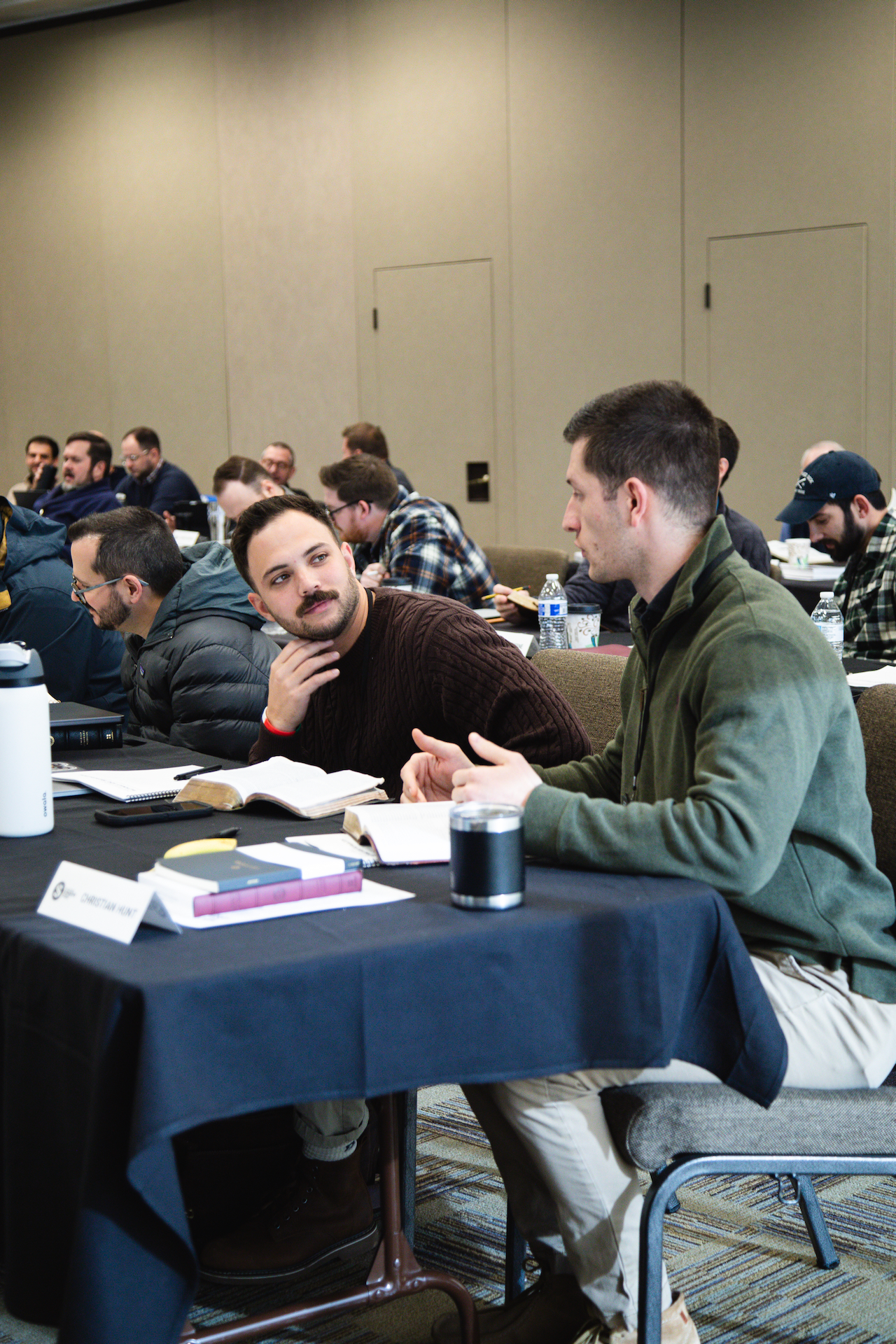
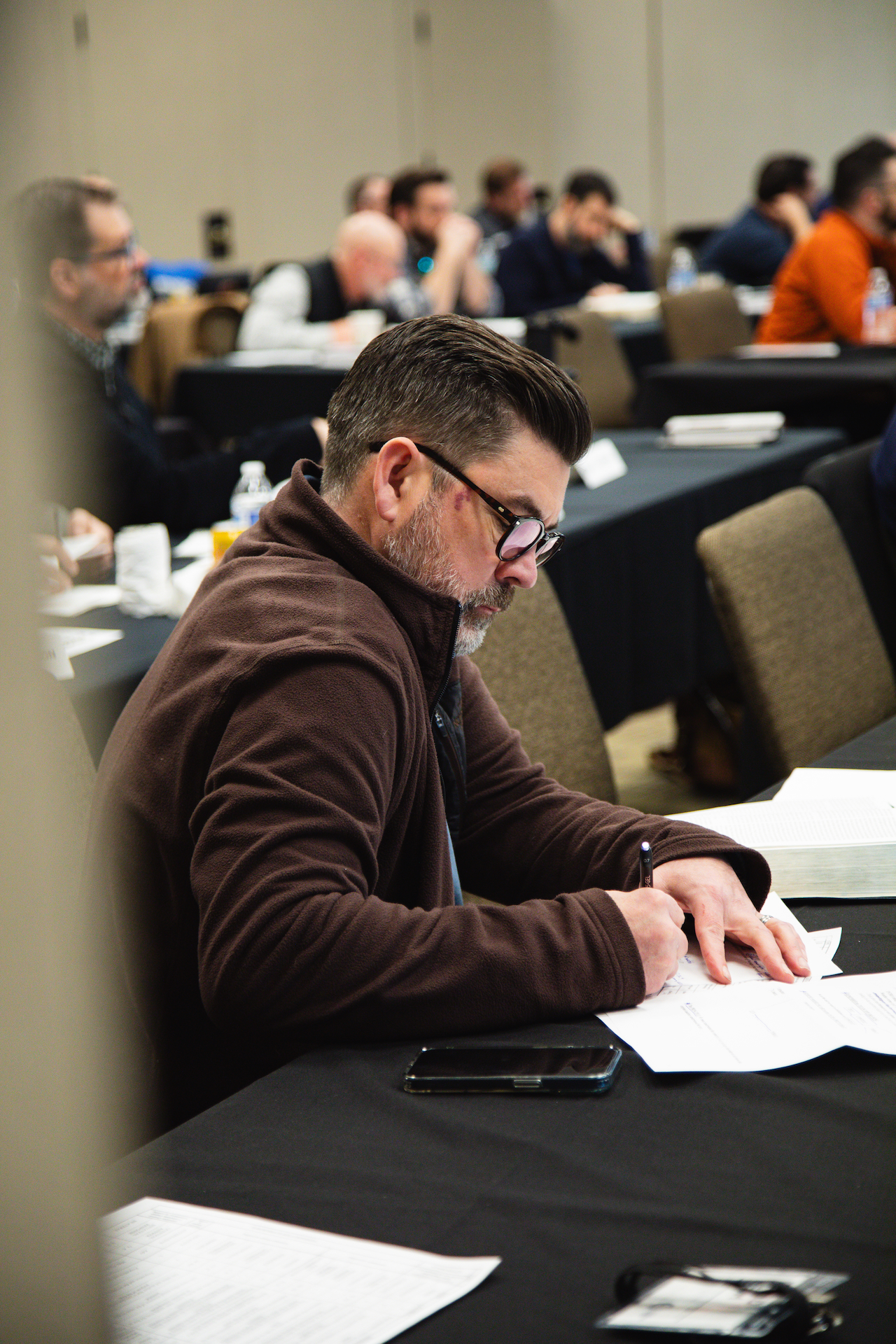
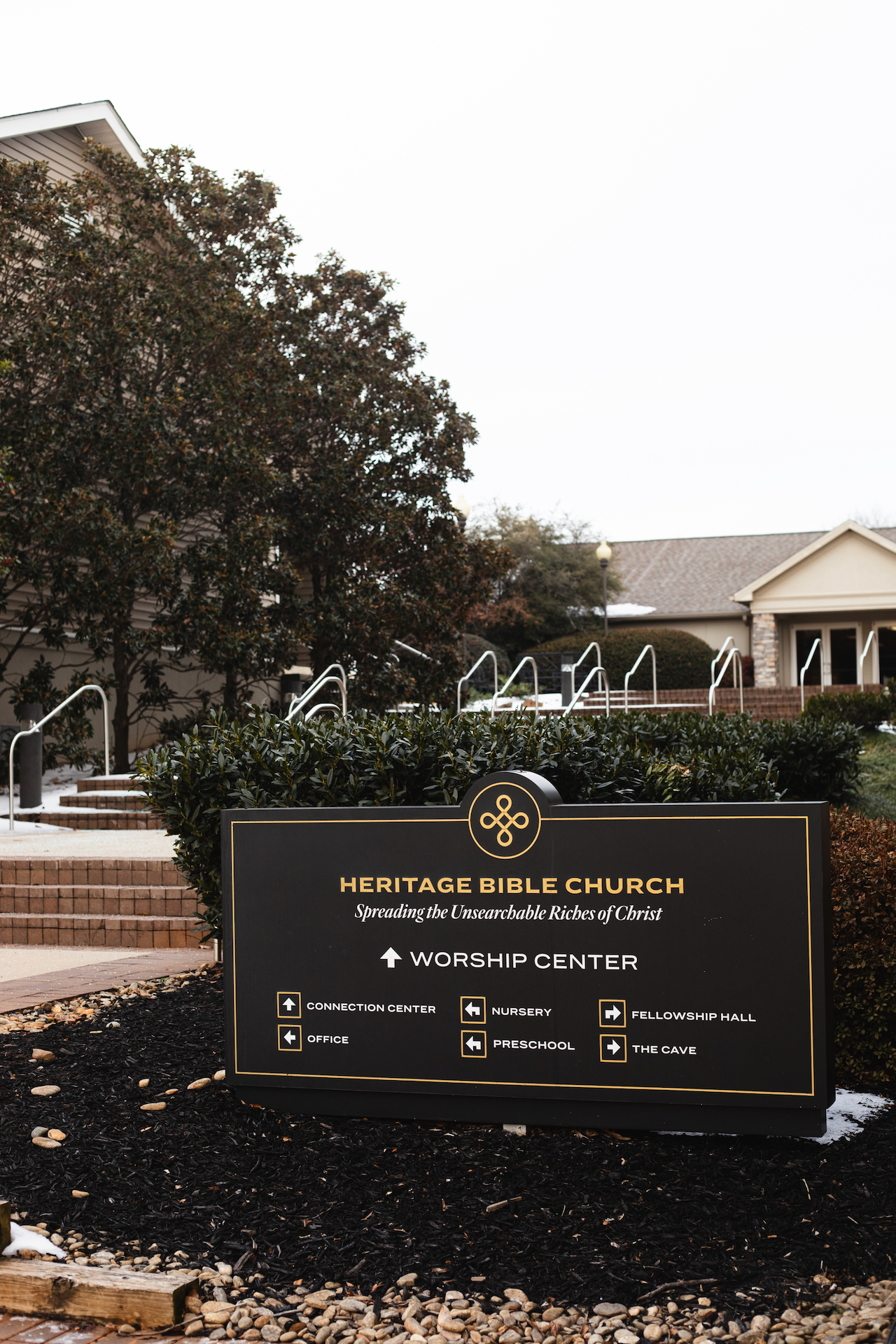
As usual, the photos from our week with the men.